Meet TheMailer: The AI Phishing Kit that Rewrites Emails and Taps Top Models
TheMailer is a popular self-hosted phishing platform that runs on AI models like Claude and ChatGPT, going beyond writing lures to tailor them to each mail provider and rewrite them until they bypass spam filters.


Key Takeaways
- TheMailer is a self-hosted phishing platform that plugs into commercial AI models like Claude and ChatGPT at every stage of a campaign.
- Its Inbox Loop automatically rewrites emails and retests delivery until a message evades spam filters and reaches the victim’s inbox.
- Since each recipient gets a uniquely rewritten email, content-based filters can’t block a single template, so detection must focus on intent and behavior.
When generative AI went mainstream in late 2022, some of the biggest concerns focused on how cybercriminals would use it. People pictured attackers using AI to sharpen their phishing game by fixing grammar, translating emails into any language, and creating pixel-perfect branded lures.
While attackers use AI to create better phishing lures, today's cybercrime tools do much more.
Enter TheMailer. Varonis Threat Labs recently identified a self-hosted phishing platform that uses leading AI services, including Claude, ChatGPT, Grok, Gemini, Mistral, and DeepSeek, at every stage of a phishing campaign. Operators simply plug in their own API key and pick the model.
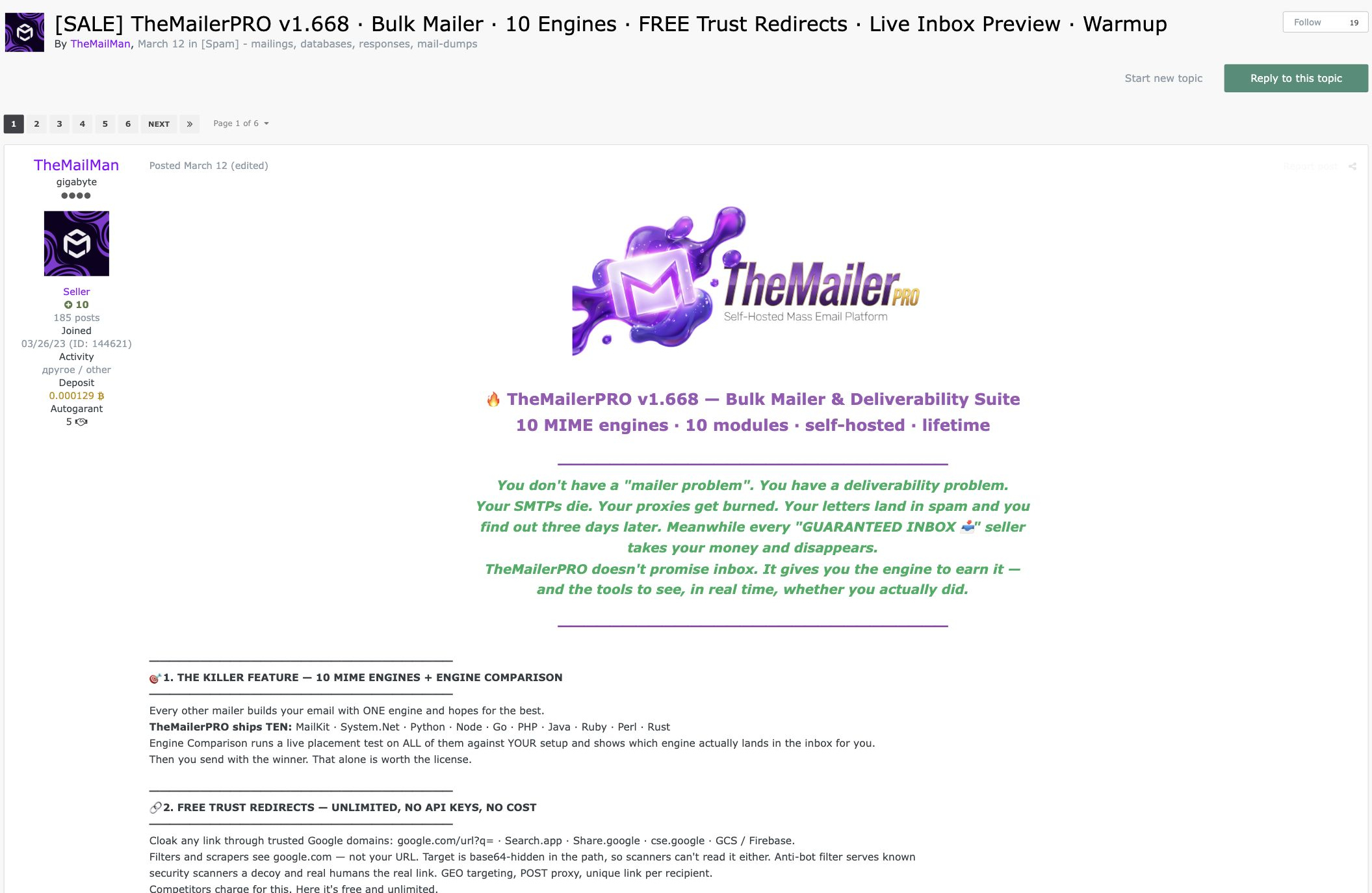
Advertised on a cybercrime network since March 2026, the tool’s sales thread has drawn more than 24,000 views, and it appears to have built a large customer base.
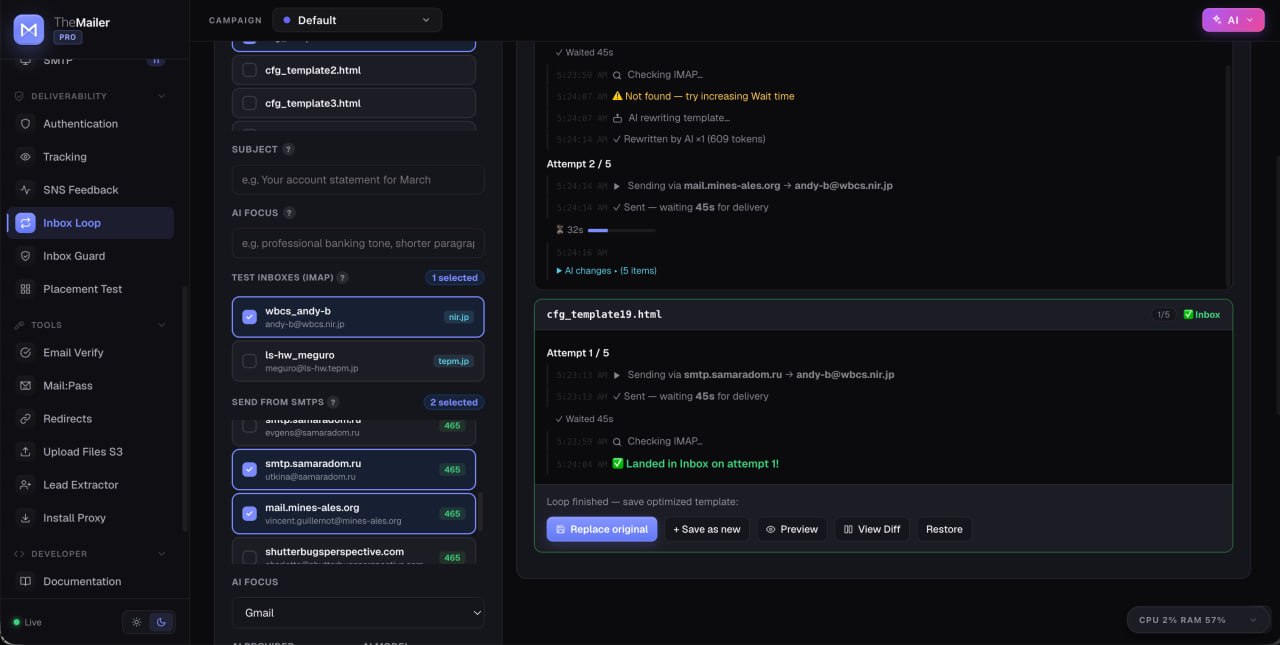
The clearest example of how far things have moved is TheMailer’s Inbox Loop. It sends a test email and checks whether the test was filtered as spam. If so, the tool uses AI to rewrite the message and retry until it reaches the victim’s inbox.
TheMailer also writes HTML lures from short prompts, turns real brand emails into templates, tailors content to each mailbox provider’s filters, and strips “AI patterns,” so the text is harder to detect.
We’ve previously reported on SpamGPT, an AI-powered spam-as-a-service platform, and Dolphin X, an infostealer that uses AI to rank victims by value. TheMailer goes further, with AI built into how the whole platform works.
What is TheMailer?
TheMailer is sold with a lifetime license and is advertised between $3,000 and $6,000, depending on the deal and whether its AI modules are included. The seller runs a Telegram channel and accepts cryptocurrency through an automated sales bot, so buyers can pay and get their license without waiting for support. Buyers also get free installation and support. In practice, this means buyers only need to bring their own SMTP servers, proxies, and target lists, and the seller handles the rest.
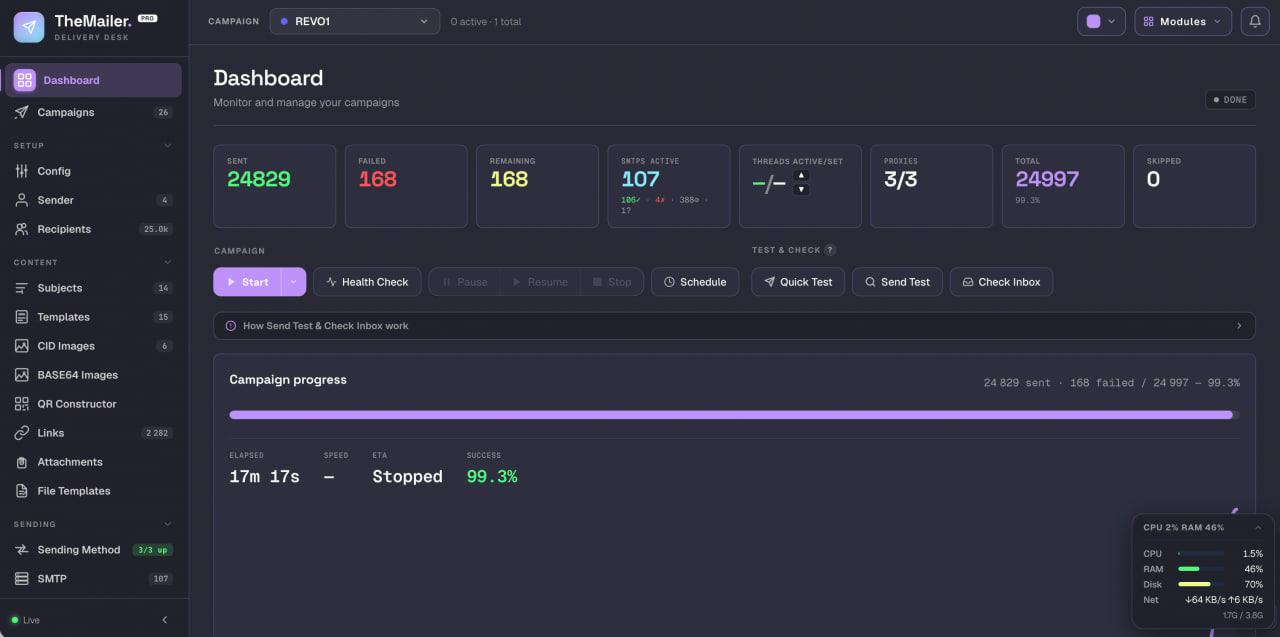
The interface looks like an email marketing tool. Its features include “trust redirects” that hide malicious links behind Google domains, direct-to-MX sending over SOCKS5 proxies, and randomized headers, content, and sender profiles so each message is different.
Commercial AI model abuse
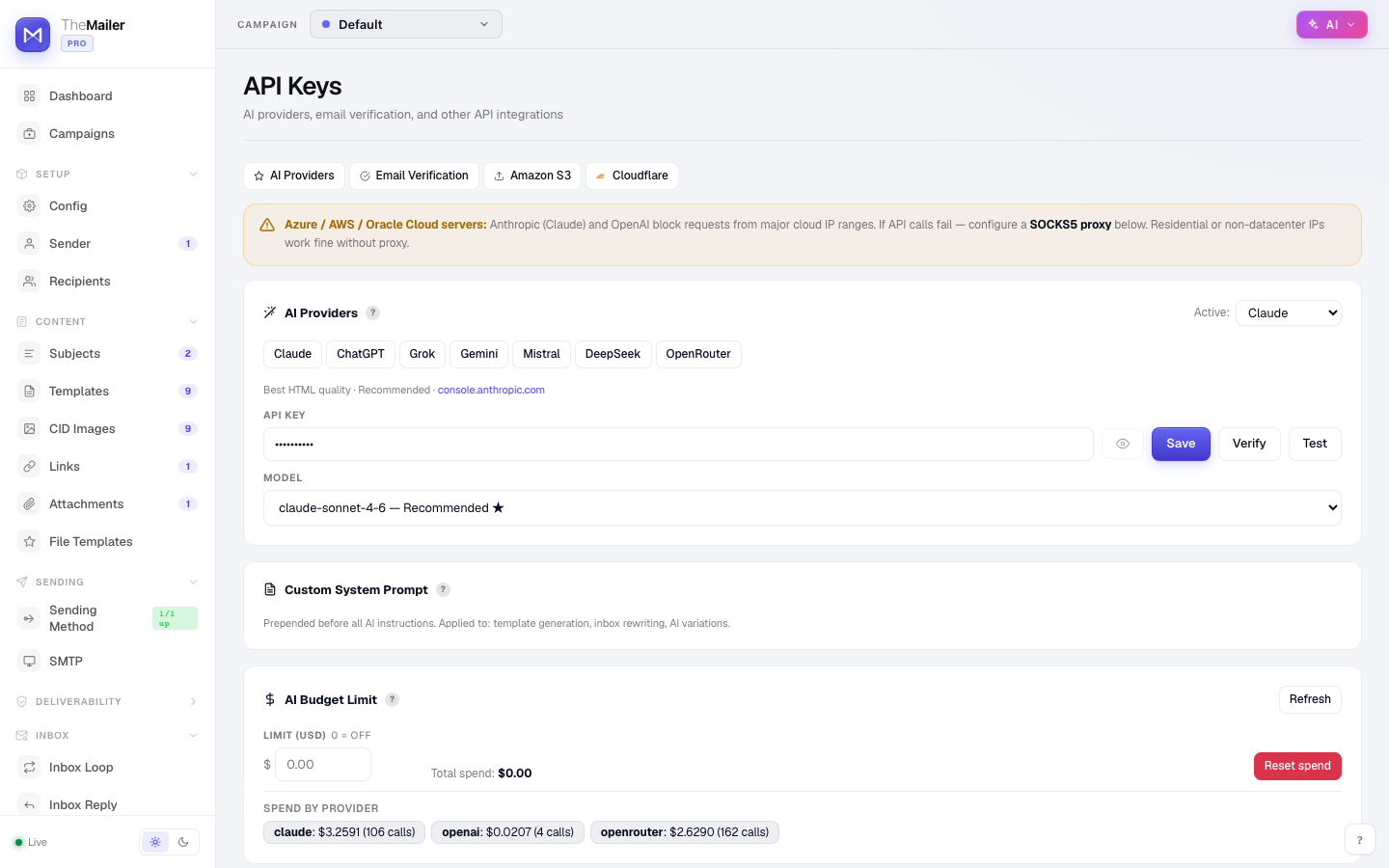
TheMailer connects to commercial AI services through operator-supplied API keys, including Claude, ChatGPT, Grok, Gemini, Mistral, DeepSeek, and OpenRouter. The tool’s configuration page notes that Anthropic and OpenAI block requests from cloud IP ranges, and instructs operators to route traffic through SOCKS5 or residential proxies to bypass those controls.
Per-recipient templates and subject lines
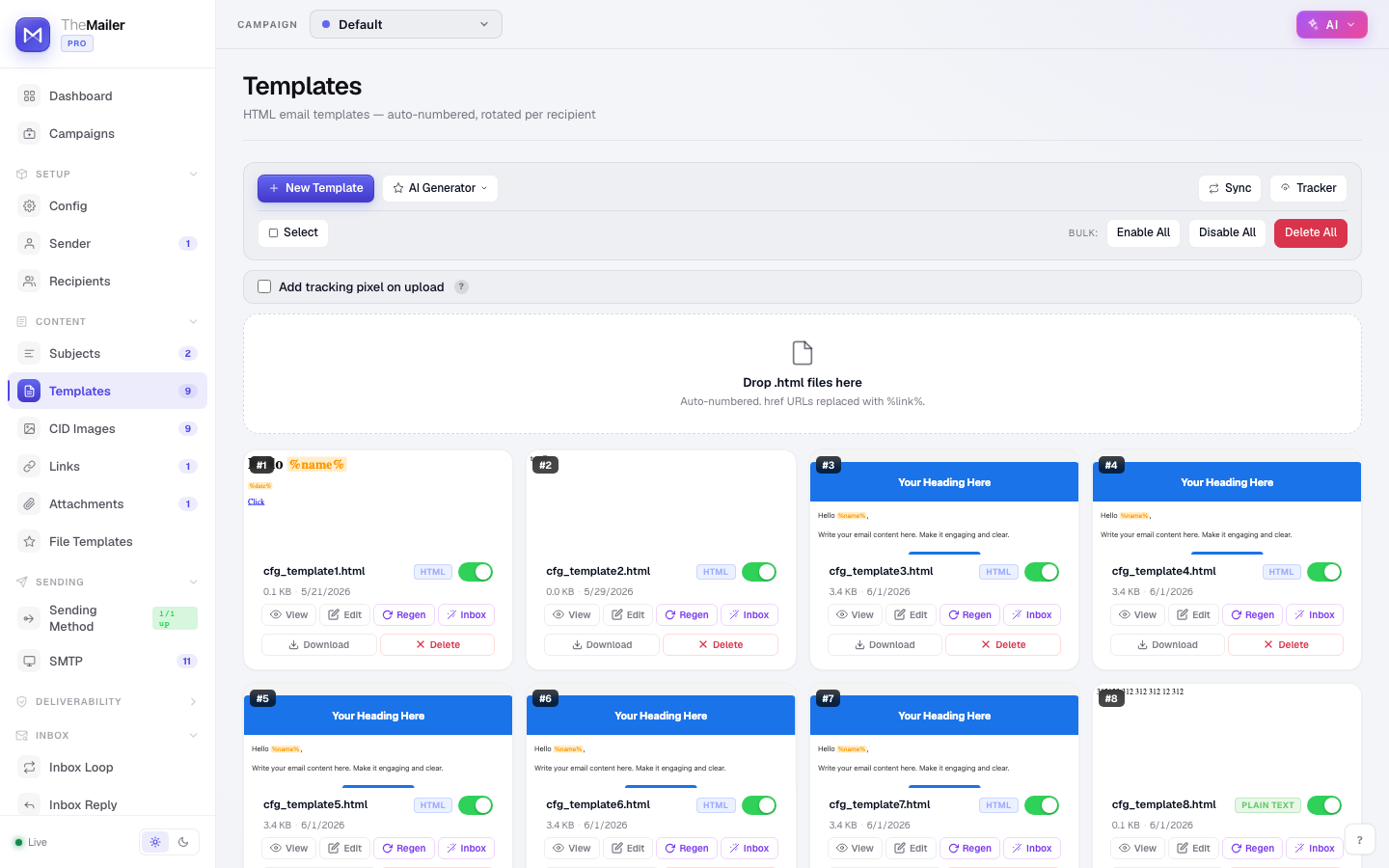
The AI Letter Builder writes HTML emails from a text description. Email templates can be regenerated using AI and rotated, ensuring each victim receives a different version. Subject lines work the same way.
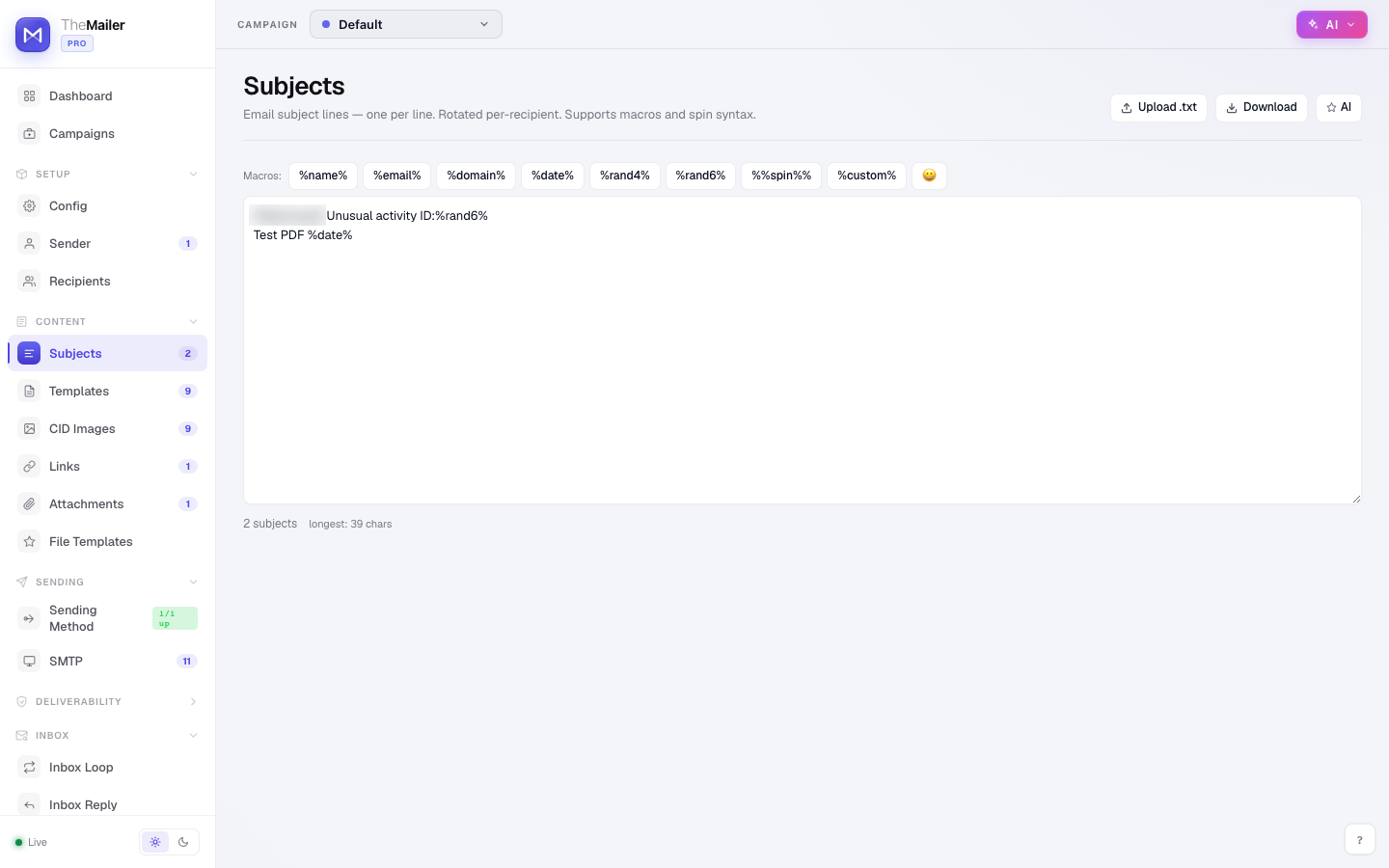
One sample subject line impersonates Robinhood with an “Unusual activity” alert and a randomized ID.
Rewriting emails until they evade filters
After each test send, the Inbox Loop checks test inboxes via IMAP. If a message lands in spam, AI rewrites the template and the cycle repeats. Operators can guide each rewrite through an “AI focus” field, and the sample text suggests a “professional banking tone.”
Tailoring content per mail provider
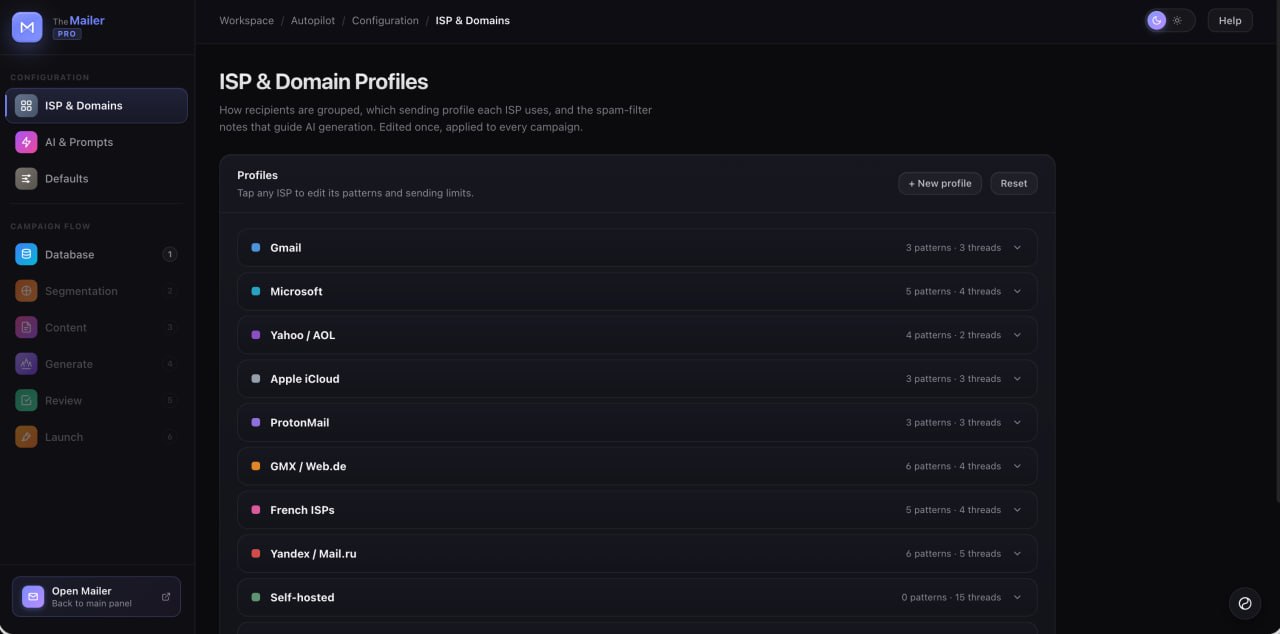
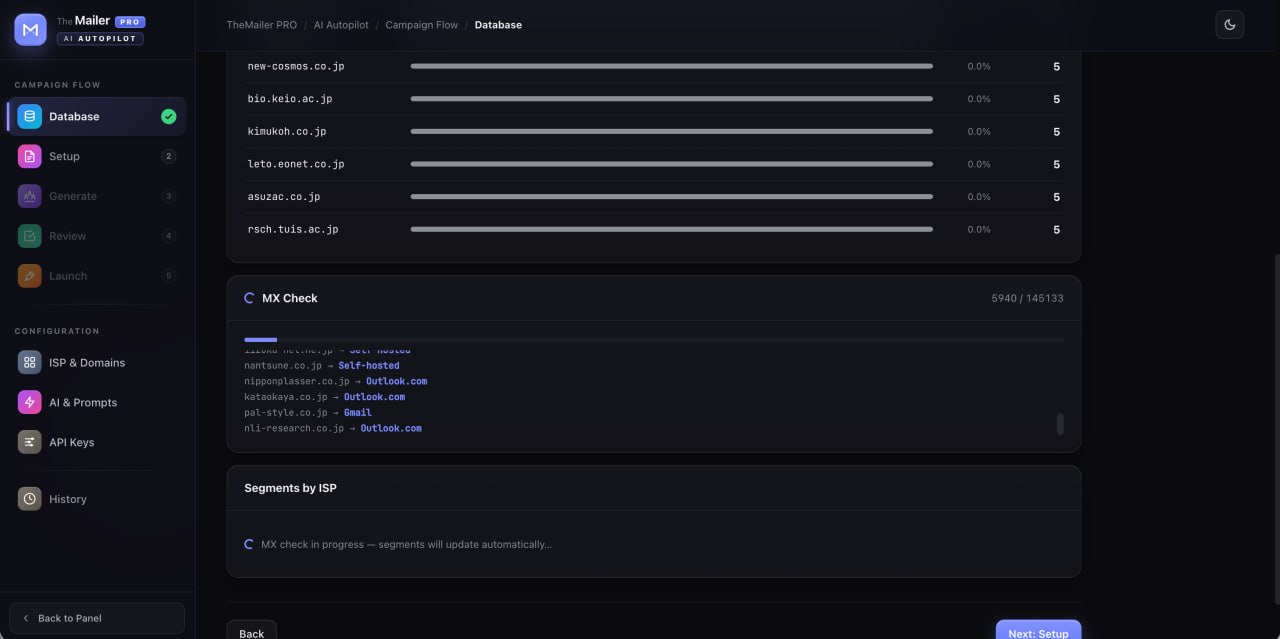
In the AI Autopilot module, recipients are grouped by mailbox provider, including Gmail, Microsoft, GMX, French ISPs, and Yandex. The module includes sending limits and “spam-filter notes that guide AI generation,” so the content varies by provider.
One screenshot shows Autopilot sorting a list of 145,133 entries by provider, almost all of them Japanese .co.jp and .ac.jp domains belonging to businesses and universities.
Warm-up, testing, and replies
Before a campaign, AI WarmUP appears to run automated send-and-reply exchanges between new sending accounts to make them look established.
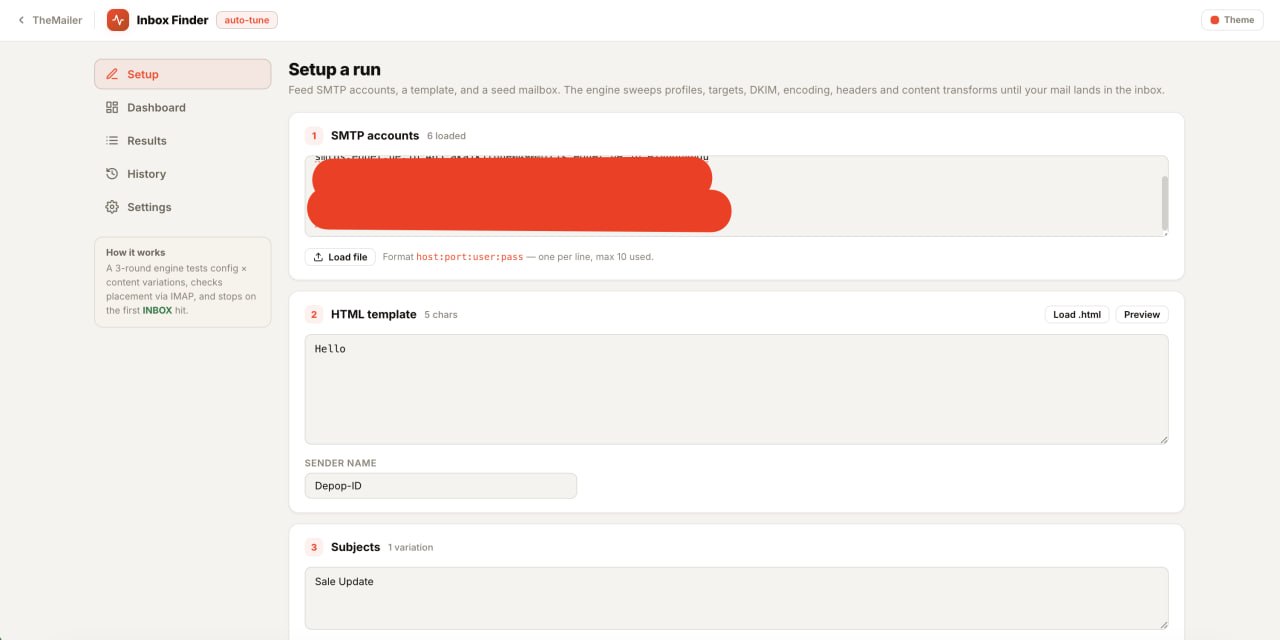
Inbox Finder tests combinations of SMTP accounts, headers, encoding, DKIM settings, and content against a seed mailbox until one combination reaches the inbox.
Inbox Reply Manager gathers replies from targets in one place, and AI can be used to sort and answer them. Recent changelogs add open redirect parsing, proxy deployment on AWS, and newer default AI models.
What they’re targeting
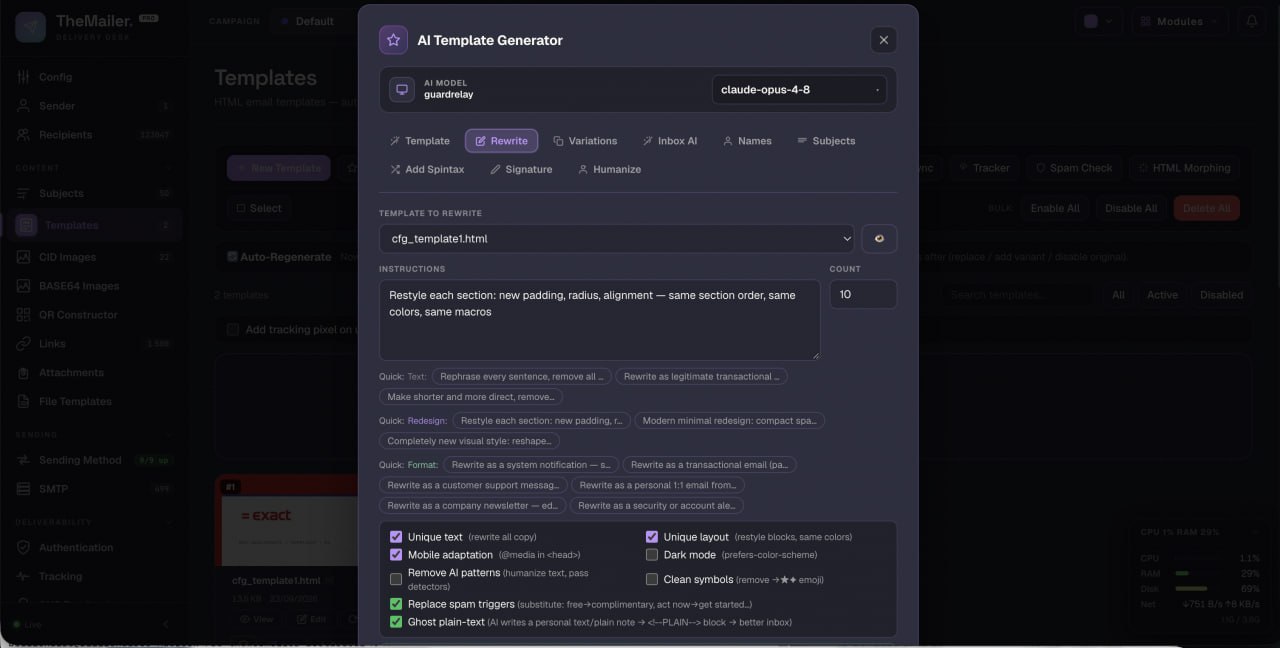
The AI Template Generator has presets to rewrite an email as a “security or account alert” or a “legitimate transactional” message, with options to “Replace spam triggers” and “Remove AI patterns (humanize text, pass detectors).”
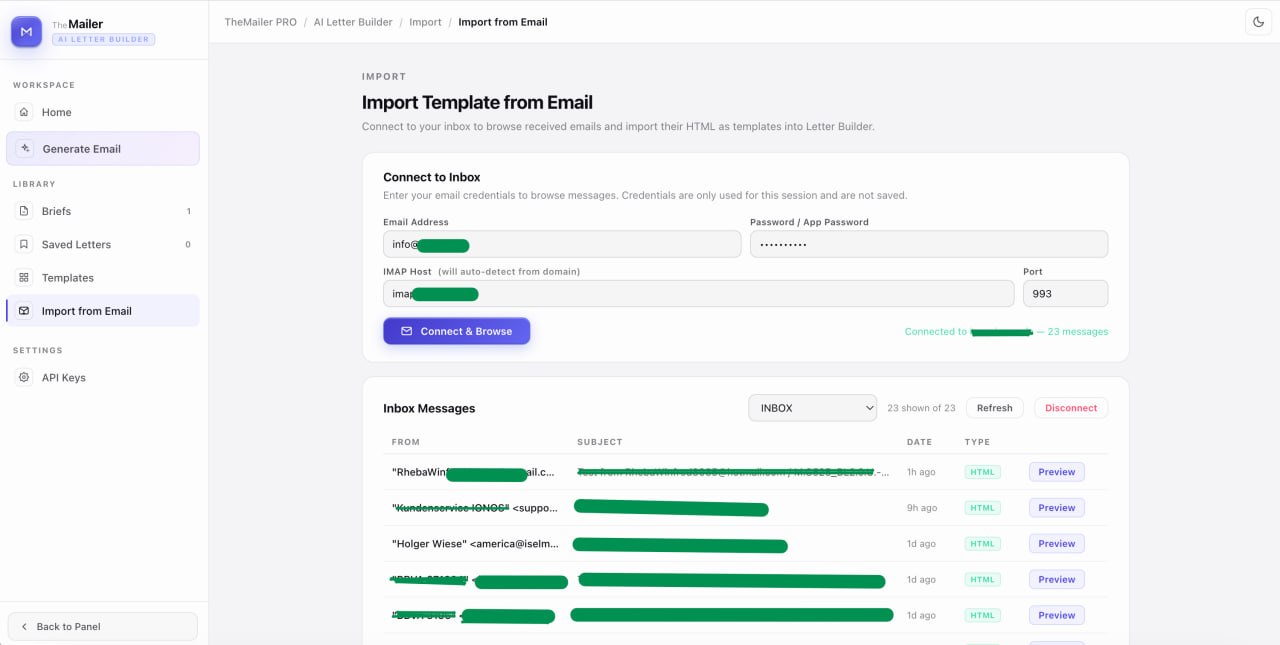
The Letter Builder can also import emails from a connected mailbox for use as templates. In one screenshot, a visible sender is “Kundenservice IONOS,” the German customer service address of hosting provider IONOS.
Other indicators point to financial services and account security lures, hotel booking callback lures, and targeting of German, French, and Russian-language mailbox providers.
TheMailer generates malicious attachments for each recipient. HTML templates are converted to PDFs with personalized filenames, so Invoice_%name%.pdf becomes Invoice_John.pdf, making the file look more legitimate to the victim. Embedded links and randomized metadata ensure that no two files share the same hash.
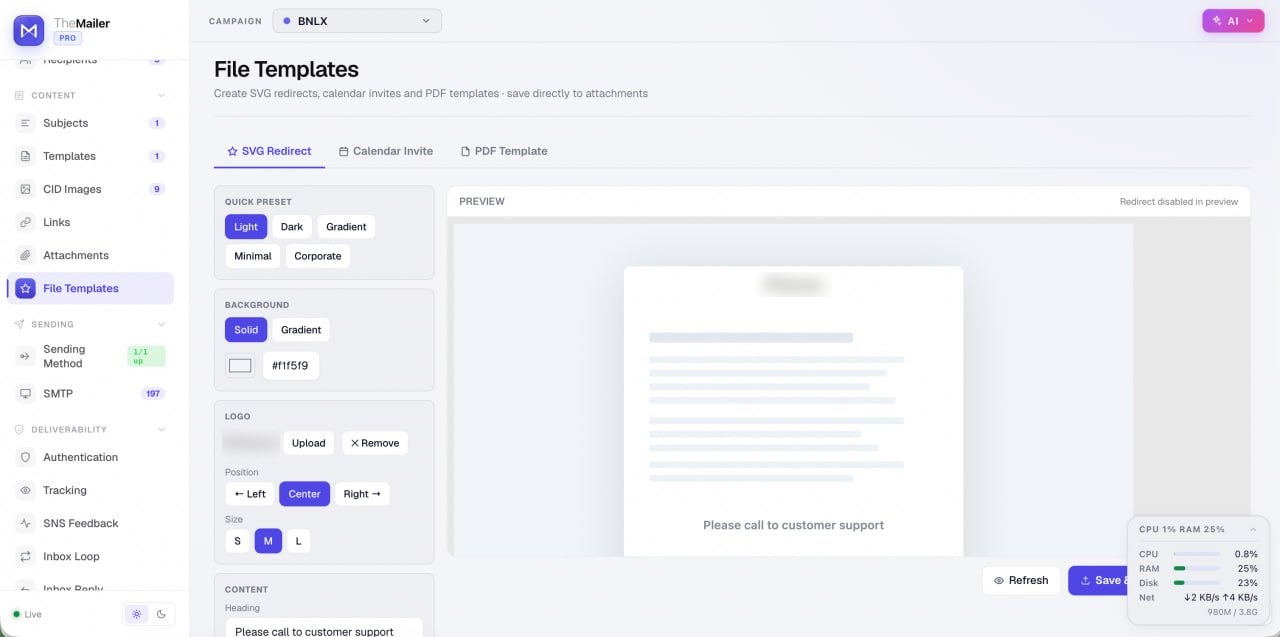
A File Templates tool also builds SVG redirects and calendar invites, and one sample SVG carries Robinhood’s branding with the line “Please call to customer support.”
AI at every step of the attack
Taken together, these features show how far AI has moved beyond writing better phishing emails. In TheMailer, it drives almost every step of a campaign, from connecting a model to getting the email into the inbox.
Writing clean HTML, tuning content for deliverability, and testing against different providers used to take a lot of time and experience. In TheMailer, each of those is done with a button click. Anyone with a few thousand dollars and an API key can run a campaign that uses AI to optimize itself.
This also makes content-based detection harder. If every recipient gets a different version that has already been tested against Gmail, Microsoft, and GMX, there’s no single template to block.
How to protect your organization
Tools like TheMailer are built to get past content-based filters. When an email can be rewritten as many times as it takes to reach the inbox, blocking on wording alone won’t work, so defenses also need to look at intent and sender behavior.
Email authentication helps here. Enforce SPF, DKIM, and DMARC at p=reject; monitor for lookalike and newly registered domains; and check links through the full redirect chain at click time, including those hidden behind Google and other trusted domains.
Phishing training should also reflect how these emails look now. Bad grammar isn’t a reliable sign anymore, so teach users to be wary of urgency, unexpected requests, and login prompts, especially “unusual activity” or account statement alerts. Least-privilege access and data monitoring limit the damage if someone clicks anyway.
Varonis Interceptor uses AI to analyze intent, context, and sender behavior, so it can stop phishing, BEC, and AI-generated lures that traditional email security misses. Book a quick demo to see how it works.